

Low-light ceiling
Larger sensor area means more light gathered per pixel — typically 1–2 stops of usable ISO headroom over APS-C, even more over MFT.
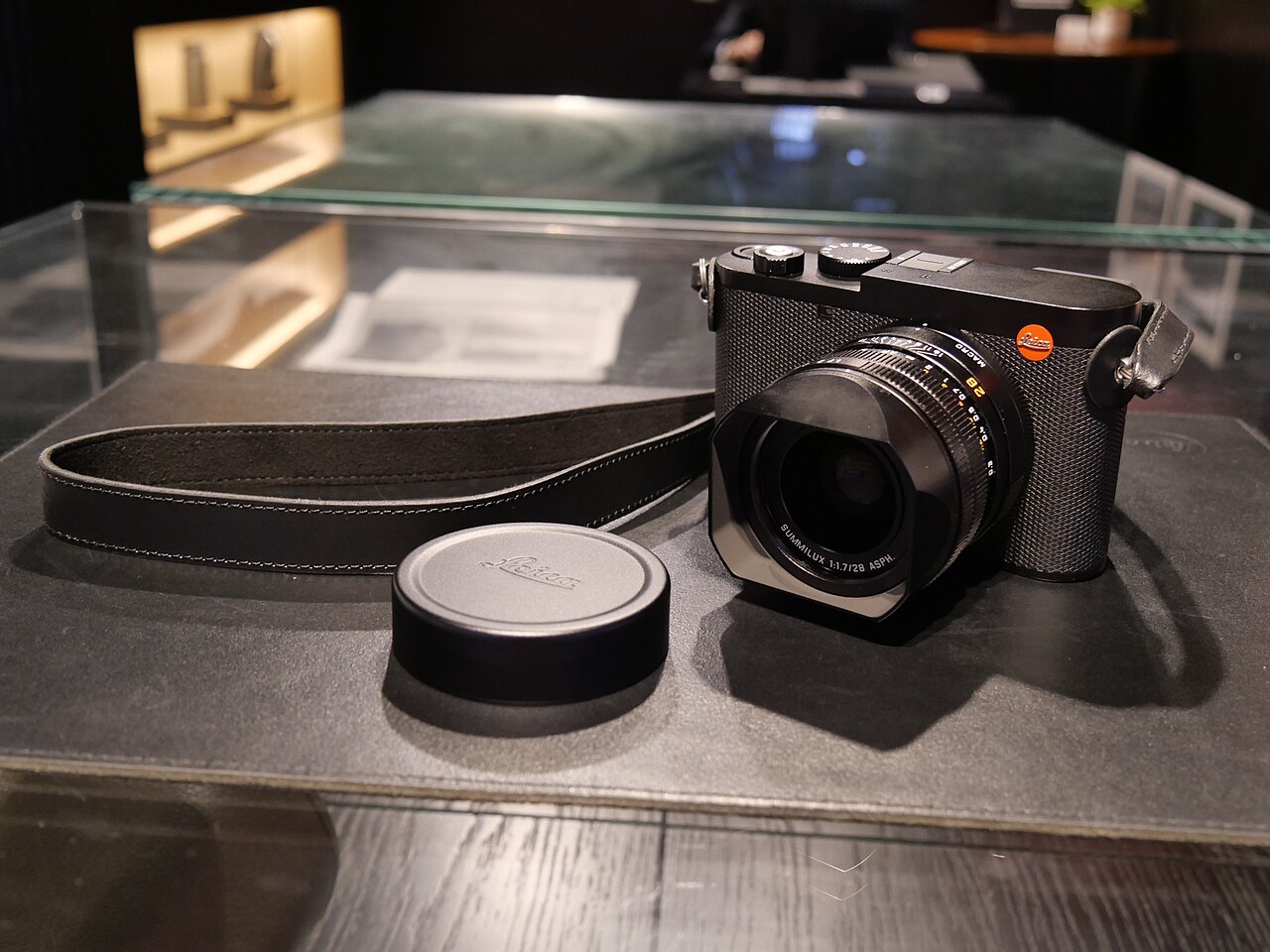
Leica's professional full-frame fixed-lens camera.
60MP fixed-lens full-frame, distilled
Best for
Avoid if
Typical price
$8,213.15Snapshot of current retail. Check current pricing at retailers below.
Product Snapshot
Quick Verdict
Best for: Travel, Street, Everyday carry
Not ideal for: Wildlife / long reach, Lens flexibility, Handheld low-light
Biggest strength: Full-frame image ceiling
Biggest compromise: No interchangeable lenses
Detailed verdict & alternatives below
Jump to verdictQuick verdict
Five-second read on who the Leica Q3 is right for — and who should keep looking.
Best for
Not ideal if
Main tradeoff
Compact, finished-feeling carry vs. fixed focal length — you trade flexibility for the joy of one lens.
Closest alternatives
Community insights
Be the first to share how you use the Leica Q3.
Owner voting opens lower on the page. Aggregates here grow as the community votes.
Open the voting panelSensor story
The single spec that does the most work in the kit you eventually build. Here's what this sensor actually means for the photos you make.
On paper, the Leica Q3 captures the same image area a 35mm film frame did — about 864 mm² of light-gathering surface. That format gives you the deepest depth-of-field control at any given f-number and the cleanest shadows in low light, at the cost of needing larger lenses to maintain that look.
Resolution sits high at 60 MP — meaningful crop room for landscape, studio, and reproduction work. Past about 30 MP, the marginal benefit shrinks for screen-only output; large prints and aggressive cropping are where the extra pixels actually show.
To-scale comparison
Larger sensor area means more light gathered per pixel — typically 1–2 stops of usable ISO headroom over APS-C, even more over MFT.
At the same f-number, depth of field is shallower than on a smaller sensor. Easier subject separation; harder to keep groups sharp.
Full-frame glass is larger and heavier. Plan for a real bag and at least one zoom or two primes.
Use cases
A practical fit-rating per workflow, derived from this product's specs alone.
Travel
Very goodCarry weight, weather sealing, and IBIS do most of the work for travel.
Street
Very goodSmall bodies and primes disappear in candid scenes.
Portraits
Very goodLarger sensors give portrait work more separation and image-quality ceiling.
Landscape
Very goodResolution and dynamic range carry landscape work — weather sealing helps in real conditions.
Wildlife / sports
Not idealTelephoto reach is non-negotiable; fixed-lens bodies aren't the right tool.
Video
Limited10-bit + IBIS is the practical floor for serious video; both push this rating up.
Everyday carry
Very goodLighter, simpler kits land in your hand more often — the camera you have wins.
Key strengths
The practical wins — derived from the shipping spec sheet, not from hands-on testing.
Larger sensor area means more light gathered per pixel and shallower depth-of-field at any given f-number — the format's signature.
High pixel count gives you flexible reframing in post and viable print size for large output without compromise.
Main limitations
Honest tradeoffs. Every line below is derivable from the spec sheet — no padded warnings.
Focal length is set in stone — no swap to longer or wider glass. Excellent within its envelope; not the right tool for wildlife or telephoto reach.
Handheld low-light and video lean harder on lens IS or higher shutter speeds than they do on IBIS-equipped bodies.
Fine for fair weather; pack a cover for events, travel, or unpredictable conditions.
No backup-while-shooting redundancy. Acceptable for personal work; below the floor for most paid event coverage.
Confirm the specific strengths above match what you actually shoot — at this tier, every category-specialist alternative is in scope.
Specs that actually matter
The handful of specifications that actually move the buying decision — translated into practical terms.
Compact-sensor designs trade ultimate low-light ceiling for size. The fixed-lens form keeps the kit small.
Who cares: Anyone weighing image-quality ceiling against carry weight.
Sensor
How this camera's sensor compares to other common formats — and what it means for your lenses.
Sensor
Crop factor ×1 — a 50mm lens frames like 50mm on full-frame.
Ownership reality
Practical ownership — carry weight, accessory burden, upgrade path. Not a market-timing read.
Carry profile
Compact daily-carry
One body, one lens — pocket of a jacket.
Lens ecosystem
Fixed — no lens decisions
Simplicity is the trade-off; no upgrade path beyond firmware.
Accessory burden
High
Extra batteries, cards, and a dedicated bag are essentials.
Upgrade path
Body swap only
Accessories
Compatibility-matched picks — memory cards, batteries, filters, bags, and more — based on this body's mount, battery, card slot, and filter thread.
Workhorse UHS-I card for stills-first cameras. Reliable, widely available.
Why: useful for any camera
UHS-II V60 for cameras that need sustained write speed for 4K+ video.
Why: useful for any camera
Top-tier UHS-II V90 for sustained 6K+ workflows and high-bitrate ProRes.
Why: useful for any camera
Charges two spares at once over USB-C; pick the version matching your battery model.
Why: useful for any camera
49mm protective UV filter — X100VI, Ricoh GR IIIx, Leica Q3, many primes.
Why: matches the 49mm filter thread
Quick-release sling for mid-to-large bodies. Works with anchor-link cameras.
Why: useful for any camera
Premium braided silk cord — beloved on Leica Q-series and Fuji X100 bodies.
Why: hand-picked for the Leica Q3
Smaller, lighter sling for compact mirrorless bodies (X100VI, A7C, X-T5).
Why: useful for any camera
10L day-pack for one body + 2 lenses + 13" laptop. Best-in-class organisation.
Why: useful for any camera
Compact sling for a single small body + spare lens. Ideal for X100VI or GR III.
Why: useful for any camera
Compact travel tripod with the 496 ball head — solid 10 kg payload for the price.
Why: useful for any camera
Folds to wine-bottle size; 9.1 kg payload rating; ball head built in.
Why: useful for any camera
Compact on-camera shotgun for hybrid shooters with a 3.5mm input.
Why: the body has a mic input
Broadcast-grade on-camera shotgun. USB-C output doubles as a podcast mic.
Why: the body has a mic input
1500-nit on-camera monitor for outdoor video work. HDMI in/out, false colour, waveform.
Why: useful for any camera
Pick the SmallRig cage made for your specific body. Adds Arca + 1/4-20 + cold shoes for rigging.
Why: useful for any camera
1TB pocket SSD — fast offload for video shoots and travel backups.
Why: useful for any camera
Round-head TTL flash with magnetic modifiers. Pick the version for your hot shoe.
Why: the body has a hot shoe
Free for every modern mirrorless — use your phone as a Wi-Fi remote with live view.
Why: useful for any camera
Foldable rain cover for unexpected weather. Fits standard zooms and short telephotos.
Why: useful for any camera
Pick the model that fits your body. Cheap insurance against rear-screen scratches.
Why: useful for any camera
Sensor swabs (correct sensor size), blower, microfibre, lens pen. The basics.
Why: useful for any camera
As an Amazon Associate, GearAtlas earns from qualifying purchases. Recommendations are picked for compatibility and usefulness — never for commission rate. How affiliate links work.
Owners
Real-world consensus voted by the community — not spec-sheet numbers. Sign in to add your votes.
Community verdict
0 votesNot enough community votes yet to call a verdict. Be the first to shape what this gear is known for — vote below.
Owner consensus
From community votes · not specsThe owner consensus unlocks once enough community members have voted to avoid a false read — 6 more votes to go. Vote or review above to help it along.
You're viewing the community consensus. Sign in to add your votes.
Sign in to voteWhat the community shoots with this most.
The subjective look owners describe.
Real-world autofocus performance.
Real-world low-light performance.
Bang for the buck.
What it is like to actually use.
What owners praise.
Recurring frustrations.
Share your experience
A 1-minute guided review — it also shapes the community consensus.
No community reviews yet
Be the first to share how this performs in the real world — your review also shapes the community consensus above.
Alternatives
Closest neighbors in the catalogue — same category, similar price, with a nudge for shared mount or ecosystem.
FAQ
The questions buyers most often have at this stage of the decision.
Based on its specifications, yes — for someone who values simplicity and image quality over flexibility. There's no "which lens?" decision, the form factor is forgiving, and the lens is sharp out of the box. Less ideal if you want to grow into a lens system.
If you crop hard in post, print large, or shoot reproduction/landscape work, yes. For screen-only output the marginal benefit past about 30 MP shrinks fast — you're paying in storage and processing for headroom you may not use.
Check current pricing for the Leica Q3
As an Amazon Associate, GearAtlas may earn from qualifying purchases. How affiliate links work
